 A Network of People Building Peace
Search results
-
-
-
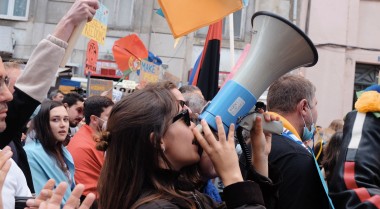
Advancing Sustainable Peace in Southern Africa through Civil Society and SADC Partnerships
Regional intergovernmental organisations (RIGOs) play a unique role in peacebuilding and sustaining peace – they have the potential to bring together...
-
-

-
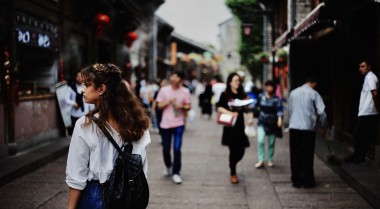
Building Sustainable Peace: Confronting Polarisation, Enabling Transformation
Background
For the past 6 years, the GPPAC Improving Practices Working Group (IPWG) has been generating and utilizing Human Security and peacebuilding resources to enhance the impact of the broader GPPAC network.
The roundtable format for enhancing GPPAC member practice was developed to be more inclusive and draw upon the network experience. During the September 2022 Learning Month, The IPWG used the roundtable format to focus on intersectionalities.* The first roundtable discussed the crucial role of youth in bridging sides in divided societies and the necessity of education in peacebuilding. The discussion concluded with a strong call to further explore how to overcome polarities as local peacebuilders operate in increasingly socially and politically polarised societies.
As part of the GPPAC Improving Practice Working Group series focusing on "intersectionalities," this session will explore different dynamics of polarisation and how the principle of adaptive peacebuilding can address some of the major effects of polarised societies. The "round table" format, as opposed to "webinar", will encourage interaction and direct engagement with the topic, thus contributing to solidarity among the participants in addition to learning as we consider together how we can confront polarisation.
The approach of adaptive peacebuilding fully involves societies and communities which are intended to benefit from peacebuilding. It actively engages them in a structured process of learning and adaptation.
* ”Intersectionality refers to how multiple factors or systems of power and oppression – such as gender, race, class, age, and sexuality – intersect in defining the societal structures and people's lived experiences. In conflict-affected societies, intersectionality helps understand not only the kinds of violence people might suffer but also the varied interests, needs, agencies, and views toward what constitutes inclusive and sustainable peace." Source: Gender and Youth / Intersectionality / Peacebuilding, post-conflict rehabilitation and reconstruction, by Elena B. Stavrevska / Sarah Smith (2020)Speakers
Two guest speakers will share how polarisation affects their work and reflect on opportunities to reduce polarisation.
- Lea Perekrests, Deputy Director of Operations, Europe & MENA, Institute of Economics and Peace, will present the systems approach of the Insitute of Economics and Peace, "Pillars of Positive Peace."
- Carole Frampton de Tscharner, Organizatonal Development Lead at PeaceNexus, will reflect on internal organizational polarization, presenting a "polarity framework".
Discussion
The informal discussion will offer ample time for Q&A and participant sharing. It will be a space for reflection and joint learning.
We invite GPPAC network members, the wider peacebuilding community, and donors funding PB efforts worldwide to join us for a lively discussion. We encourage participants to bring their own success (and failure!) examples of overcoming polarization.
Registration
Please register here to join via the zoom platform.
About the GPPAC Improving Practice Working Group
The GPPAC Improving Practices Working Group aims to improve how conflict prevention and peacebuilding are done in practice. Based on the principles of Human Security and Multi-Stakeholder participation, the Improving Practice Working Group has held regular face-to-face and virtual gatherings to strengthen the bonds, learning and sharing among the group. -
Conflict, Colonialism, and Masculinity
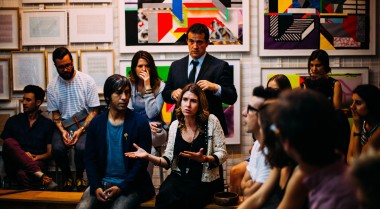
Building upon the commitments of GPPAC's Gender Policy to challenge and transform harmful gender practices in conflict-affected societies, the Middle East Nonviolence and Democracy (MEND), with the support of the Global Partnership for the Prevention of Armed Conflict, is hosting an online discussion on Conflict, Colonialism and Masculinity on Wednesday 14 December (Wednesday) 3.00 - 4.15 PM (CET) check your local time here.
Please register here.
Speakers:
- Professor Paula Banerjee, University of Calcutta, India
- Michael Fanizadeh, Vienna Institute for International Dialogue and Cooperation, Austria
- Maja Vitas Majstorović, Gender and Inclusivity Adviser at GPPAC Global Secretariat;
- Lucy Nusseibeh, GPPACsGender Focal Point from Palestine and Founder of Middle East Nonviolence and Democracy (MEND), Palestine, will also facilitate the webinar and the following discussion.
Key questions for the discussion:
- How does masculinity impact peacemaking?
- What is the intersectionality between caste, class, ethnicity, and gender and its effects on peacemaking?
- How are traditional gender roles emphasized and instrumentalised in the contexts of conflict, repression, and occupation?
- How do the powerless resort to asserting power, and with what consequences?
The webinar is a part of the GPPAC's gender focal points learning exchange series. To participate, register here!
For more information, see the concept note here.
-
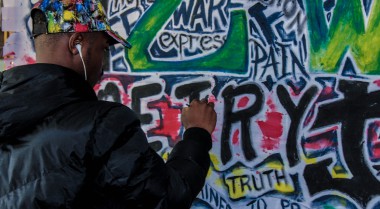
Localising Climate Security Risk Assessment: An Inception Case-Study from the Kaabong District of Uganda
This case study summarises the first time implementing a Climate Security Guidance Note – a practical step-by-step guide for the localisation of...
-
-
-
Surrounded by Tech: Leveraging Technology for Peace
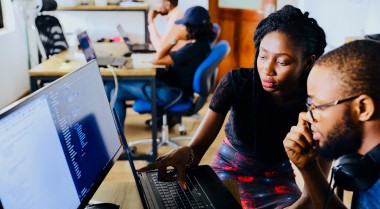
As a continuation of the GPPAC Learning Month, the Improving Practices Working group invites you to join the third roundtable in its series on Intersectionalities: this will explore the topic of technology and peace. During the second round table in December, the use of technology in violent conflict emerged as one of the core "wicked problems" that need to be addressed in the context of adaptive peacebuilding. Peacebuilders face a range of threats ranging from colonised bias in 'big data' to robotised warfare, from social media marginalisation to cyber warfare and from surveillance to intentional misinformation. The roundtable will explore possibilities of how technology that previously negatively impacted stressed communities can be used to promote peace.
This roundtable aims to start a conversation about how technological advances impact peace, justice, and conflict in positive and negative ways and share practitioners' examples. Questions for discussion include
- What recent technology advances scare you the most?
- What recent technology advances offer the most significant opportunity for peacebuilders?
The "roundtable" format, instead of "webinar," encourages interaction and direct engagement with the topic. This contributes to solidarity-building among the participants and learning as we consider leveraging technology for peace. We will start with an overview of peace and tech and then examine a specific case study.
RegistrationPlease register here to join via the zoom platform.
Speakers:- Jonathan Rudy is the GPPAC Improving Practices Working Group co-chair and peace educator. He has taught peacebuilding and human security courses for more than 20 years at the Mindanao Peacebuilding Institute, in higher education, and other adult learning spaces. With a technology background, training, and as a self-proclaimed ‘geek’ he has followed tech trends for decades. Jonathan will give a very brief overview of the history/context of tech for peace and war, as well as a brief mapping of current and future tech trends that impact peacebuilders. See www.PeaceBuildingGlobal.com for more information on Jonathan.
- Zander Willoughby is a peacebuilding advocate and practitioner working on ConnexUs in the Strategy Alignment Department at Search for Common Ground. His experience in the peacebuilding field, having previously served as a Youth, Peace, and Security Advocacy Expert, Program Manager for +Peace at the Alliance for Peacebuilding, and Peace Studies Coordinator for Manchester University in North Manchester, Indiana. Zander holds a Bachelor's degree in Political Science, French, and Peace Studies from Manchester University. Based in Northeast Washington, DC, he enjoys learning new languages, foraging, and all things coffee & hockey in his free time. Zander will talk about democratising access to information and fostering collaboration across sectors to improve programmatic impact in conflict-affected areas. He will further share his experience using ConnexUs to facilitate access, collaboration, and social impact. Participants are invited to reflect on their own information sources and share their own best practices during the roundtable.
About the GPPAC Improving Practice Working Group
The GPPAC Improving Practices Working Group aims to improve how conflict prevention and peacebuilding are done in practice. Based on the principles of Human Security and Multi-Stakeholder participation, the Improving Practice Working Group has held regular face-to-face and virtual gatherings to strengthen the bonds, learning and sharing among the group. -