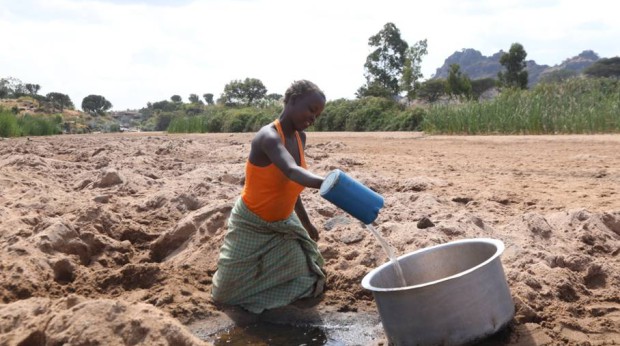
 A Network of People Building Peace
The Climate, Peace, and Security (CLIMPSE) Project

GPPAC members are implementing a 30-month, European Union (EU) co-funded project that empowers local peacebuilders to advance climate-sensitive peacebuilding, helping people and communities better prepare and respond to climate-related security risks.
Providing a glimpse into the bigger picture of climate, peace, and security, CLIMPSE is about what becomes possible when local peacebuilders have the knowledge, tools, and platforms to act on the connections between climate, peace, and security.
What does the project aim to achieve?
CLIMPSE has two goals:
- Strengthen local peacebuilders’ capacity: By deepening awareness of the links between climate, peace, and security, and strengthening practical skills, local peacebuilders are better equipped to develop and implement climate-sensitive peacebuilding policies, practices, and infrastructures in their communities. Through peer learning and exchange within the GPPAC network, they draw on shared experience and knowledge to strengthen their responses to climate-related security risks.
- Amplify local knowledge to influence policy: By strengthening their capacity, local peacebuilders are better equipped to engage with regional and global policymakers. In turn, policymakers gain access to local expertise and knowledge, enabling them to design climate-sensitive peacebuilding policies, practices, and infrastructures that reflect local realities.
When and where is the project implemented?
CLIMPSE was officially launched in July 2025 and is being designed and implemented by GPPAC members in three focus regions:
- Central America by La Coordinadora Regional de Investigaciones Económicas y Sociales (CRIES)
- Central Asia by the Foundation for Tolerance International (FTI); and,
- South Asia by the Centre for South Asian Studies (CSAS)
While most activities take place in these three regions, CLIMPSE is firmly rooted in GPPAC’s broader network, bringing its network approach to life through cross-regional learning and collaboration. Concretely, knowledge-sharing and peer exchange are actively encouraged and supported across the entire membership, including through GPPAC Working Groups and targeted initiatives in other regions. This ensures that lessons, tools, and locally grounded insights extend beyond the focus areas and inform practice and dialogue throughout GPPAC’s global community.
Why is the project needed?
Local peacebuilders are not only the first to witness the effects of climate change on their communities, they are also the first to respond. While local peacebuilders already contribute to addressing climate-related challenges, many are unaware of the relevance of their work to climate, peace, and security issues. At the same time, policymaking processes often struggle to incorporate these insights, resulting in a climate, peace, and security agenda that is not rooted in locally lived experiences.
As a result, local peacebuilders' solutions often remain local because most global attention on the effects of climate change narrowly focuses on security threats. In this, the peace dimension is too often missing. CLIMPSE bridges this gap by amplifying and connecting local expertise with global policy discussions on climate, peace, and security, ensuring peacebuilders’ solutions influence decisions beyond their communities.
Get in touch
For questions or inquiries, please reach out to
- Victoria Seeck, Climate, Peace and Security Coordinator, at v.seeck@gppac.net
Related highlights
 Manual
Localising Climate, Peace and Security: A Practical Step-by-Step Guidance Note for Local Peacebuilders
 Summary Note
Addressing the Interlinkages between Climate Change and Human Security: An Analysis of the 2015-2023 UN Agreed Language on the Interlinkages between Climate Change, Peace and Security
 News
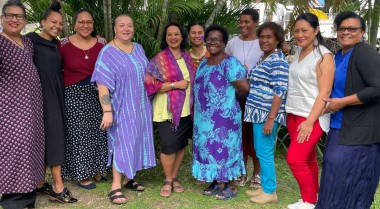
NewsThe power of connecting local, regional and global levels of action: The story of the Pacific Women Mediators Network
Related resources
 Publication
Understanding the Inclusive Peace-Development- Humanitarian Nexus: Gender, Climate and Sustaining Peace in the Pacific
 Case Study
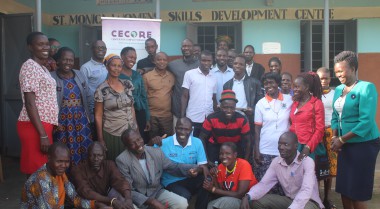
Localising Climate Security Risk Assessment: An Inception Case-Study from the Kaabong District of Uganda
 Case Study
Localised Climate-Related Security Risk Assessment: Zimbabwe Case Study