 A Network of People Building Peace
Women act for peace and security
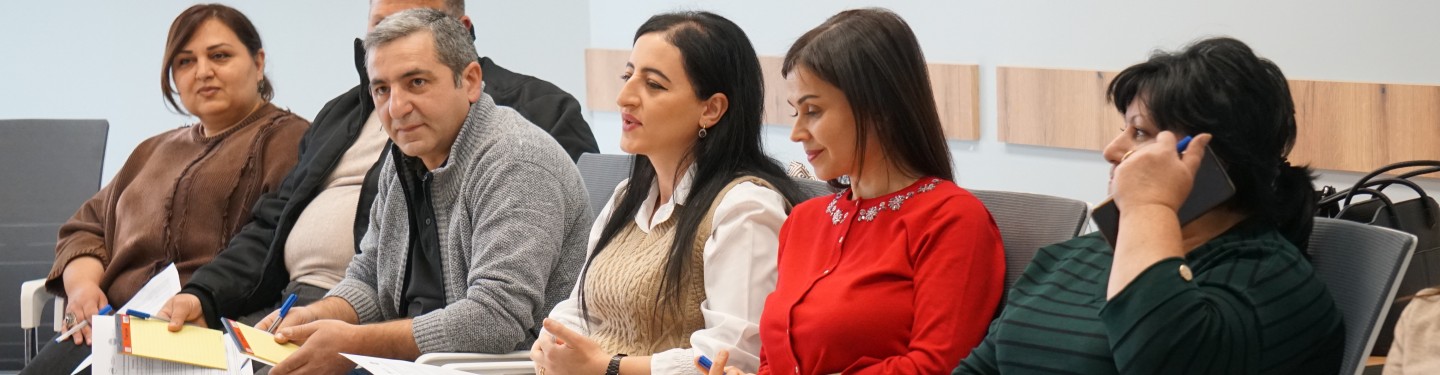
The Armenian Committee of the Helsinki Civil Assembly and the Eurasia Partnership Foundation are implementing a six-month project to empower women to meaningfully engage in the Armenia–Azerbaijan peace process and the implementation of the 2025 Joint Declaration, after being excluded from shaping it.
For more than three decades, Armenia and Azerbaijan have been locked in conflict over Nagorno-Karabakh, a region populated predominantly by ethnic Armenians. What began as unresolved tensions escalated into three devastating wars in the 1990s, in 2016, and again in 2020, separated by long periods of so-called “frozen conflict.”
The most recent war in 2020 lasted six weeks and ended with a Russian-brokered ceasefire. Yet the agreement failed to deliver lasting peace. In September 2023, violence erupted again when Azerbaijan launched a military operation in the Nagorno-Karabakh region. Facing the prospect of rule by Azerbaijan, approximately 120,000 people fled to Armenia within the span of a single week. Following Azerbaijan’s lightning offensive, the ethnic Armenian enclave was officially dissolved on January 1, 2024.
Since the 2023 offensive, peace negotiations have increasingly shifted toward bilateral talks between Baku, the capital of Azerbaijan, and Yerevan, the capital of Armenia. This development further entrenched the exclusivity of the process, a trend that emerged after the 2020 war.
Peace negotiations in the past: Largely exclusive without women’s meaningful engagement
In the context of Armenia-Azerbaijan relations, peace negotiations have remained largely exclusive. Talks typically took place behind closed doors and involved only high-level state officials. The Russian-brokered ceasefire of 2020 further contributed to a shrinking civic space, significantly limiting opportunities for grassroots actors, especially women, to meaningfully engage in peace processes. This exclusion is reinforced by systemic gender inequality and women’s limited representation in decision-making. As a result, women’s participation has often been tokenistic, with little real influence over policy or leadership decisions.
Implementing the 2025 Joint Declaration must include women
Since March 2025, Armenia and Azerbaijan stepped into a new phase of active negotiations towards a peace agreement. After months of stalled negotiations, the leaders of the two countries met in Washington, D.C. on August 8, 2025, where they announced a peace deal and signed a Joint Declaration emphasising the need to continue efforts toward the signing and final ratification of the peace agreement. Its implementation will require comprehensive efforts across national institutions and local communities. This includes women who were disproportionately affected by the conflict and experienced its social, psychological, and economic consequences. The effects of these consequences extend beyond individual trauma, affecting the health and stability of entire communities. For this reason, ensuring women’s meaningful and distinct participation in peace processes is not only a matter of inclusion but a prerequisite for sustainable and truly inclusive peace. However, women often lack the resources and opportunities to shape local or national peacebuilding strategies within the formal peace process. Therefore, if women are not meaningfully included, the peace process will remain fragile, out of touch with everyday realities, and at risk of collapsing.
The Project: Empowering young women to build post-conflict peace
To empower women to meaningfully engage in both the peace process and the implementation of the Joint Declaration, given their exclusion from shaping it, the Armenian Committee of the Helsinki Civil Assembly (HCA-Armenia) and Eurasia Partnership Foundation (EPF) are implementing a six-month project that began in October 2025. It is financially supported by the United Nations Women’s Peace and Humanitarian Fund - Rapid Response Window (WPHF-RRW).
The project targets women in war-affected communities, supporting them to step into leadership roles and actively participate in implementing the future peace agreement by enhancing their understanding of UNSCR1325 on Women, Peace, and Security and its localisation.
The project comprises local needs assessments and consultations in selected communities, followed by community-led discussions and strategy development sessions with participating women. In addition, a 3-day study trip to Yerevan aims to build the capacity of participating women in community mobilisation, critical thinking, media literacy, as well as project design and implementation. The lessons and insights gained from these activities will come together in a set of recommendations for national stakeholders on peace implementation priorities from a gender perspective, giving women a real and influential role in shaping policy and local action.
The project also helps the women participating in the project build their psychological resilience while ensuring that their perspectives, needs, and proposed solutions are heard and integrated into the post-conflict period.
As the peace agreement may be signed soon, the project ensures women are ready to step into leadership roles and build sustainable peace.
About the UN Women’s Peace and Humanitarian Fund’s Rapid Response Window
The Rapid Response Window for Women’s Participation in Peace Processes and the Implementation of Peace Agreements is a mechanism under the United Nations Women's Peace and Humanitarian Fund (WPHF) that provides targeted, short-term support to increase women’s participation in peace processes and the implementation of peace agreements.
As a flexible financing tool, the RRW plays a vital role in enabling agile, women-led peacebuilding initiatives - helping local women and young women engage meaningfully across different levels and with a range of stakeholders. Its adaptability is essential for responding to crises, preventing conflict, and seizing critical peacebuilding opportunities in rapidly changing contexts.
Related highlights
 Project
From Grassroots to High Tables
 Project
From grassroots to peace tables
 Project
Palestinian Women Lead the Way
Related resources
 Publication
Supporting Women’s Impactful Participation in Peace Processes: Learnings from Kyrgyzstan, Uganda, and Palestine
 Publication
Unlocking the Potential for Sustainable Peace in the Ferghana Valley: Key Role of Women in Conflict Resolution
 Publication
Global Peace Powered Locally: GPPAC’s Network Approach