 A Network of People Building Peace
Southeast Asia
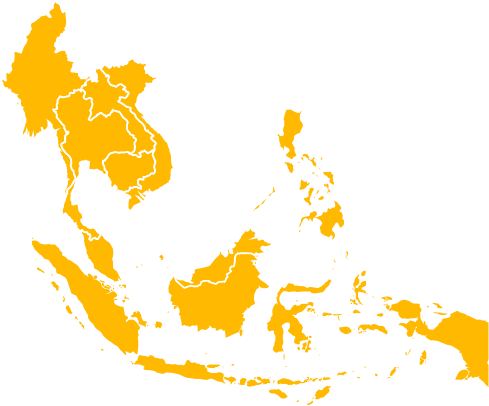
Across Southeast Asia, GPPAC members work to strengthen human security and prevent violence in contexts shaped by armed conflict, contested governance, and localised tensions. Their work focuses on building local capacities for prevention, supporting women and young people as peace actors, and sustaining dialogue and cooperation where formal political processes are fragile or stalled.
Regional context
Southeast Asia faces a diverse set of conflict and security challenges. In Myanmar, the conflict that followed the 2021 attempted military coup continues to drive displacement, humanitarian need, and regional instability, while the military’s controlled election process has deepened concerns over legitimacy rather than offering a credible route out of the crisis. ASEAN has not recognised the election process, but continues to face pressure to engage more effectively with Myanmar’s democratic, ethnic, and civil society actors.
In the Philippines, the Bangsamoro peace process remains one of the region’s most important peace agreements, but implementation has entered a sensitive phase. Delays and disputes around decommissioning, normalisation, security arrangements, and political transition in BARMM risk weakening confidence in the process and creating openings for renewed violence if not managed carefully.
In Southern Thailand, the Patani conflict remains unresolved despite periodic dialogue efforts, with local communities continuing to face insecurity linked to identity, governance, and representation. The region also faces renewed border tensions, including between Thailand and Cambodia. Across Southeast Asia, climate pressures, inequality, and restrictions on civic space further reduce the ability of civil society actors to sustain prevention work, support affected communities, and build the relationships needed for long-term peace.
Strengthening prevention, participation, and local peace infrastructure
GPPAC members in Southeast Asia sustain prevention work during periods of active conflict and political crisis. They strengthen the capacities of local communities, women, and young people to participate in peace and decision-making processes, while maintaining the relationships, skills, and networks needed for future dialogue and reconciliation.
Members facilitate dialogue across conflict divides, support local peacebuilding networks, and contribute research and advocacy on human security and conflict prevention. Their work includes community-level initiatives in Myanmar, support for peacebuilding efforts linked to Mindanao and Patani, and regional exchange on how local actors can respond to conflict, climate risks, and shrinking space for prevention work.
Through these efforts, GPPAC members help build the social and institutional foundations for more peaceful, resilient, and inclusive societies across Southeast Asia.
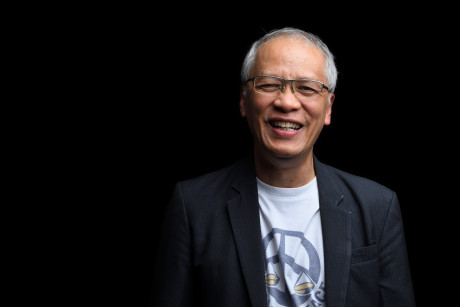
"Being part of GPPAC helps us to magnify our struggle, it becomes a protection against the local dangers we face, and allows our voices to be heard in the global and regional arenas. At the same time the local experiences give meaning to this global network. We are a network of locals, we share and learn from the experiences in different regions.”
Regional Secretariat
Initiatives for International Dialogue (IID)
27 Galaxy Street, GSIS Heights, Matina Davao
City 8000, Philippines
iidnet.org
Regional Representative
Gus Miclat
Regional Liaison Officer
Tuan Nguyen