 A Network of People Building Peace
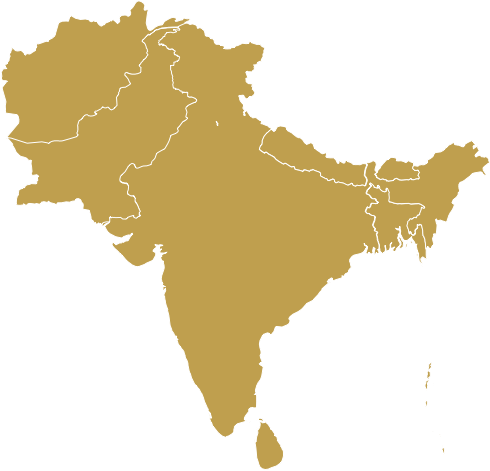
South Asia
GPPAC South Asia members work to strengthen peacebuilding, climate resilience, inclusive dialogue, and youth engagement across the region through collaboration and knowledge exchange. From civil society-led dialogue to foregrounding women’s leadership in peace and security, and building capacity among youth to systematically study peace and conflict, GPPAC members in South Asia are engaged in activities that not just create lasting impact but shape the narrative on peacebuilding in the region.
In recent decades, climate change has intensified fragility across South Asia. Floods, cyclones, heatwaves, glacial outbursts, and rising sea levels increasingly affect livelihoods, displacement patterns, food security, and social cohesion across the region. From the Himalayan to coastal areas, climate-related pressures are intensifying existing vulnerabilities and placing a growing strain on the safety and security of people, communities, and societies. Consequently, from 2024, South Asian members have increased their focus on climate, peace and security.
Why our members’ work matters in South Asia
GPPAC South Asia stands out for its dynamic and diverse membership, bringing together civil society organisations, policy research institutes, activists, mediators, and academics, to bridge the gap between policy and practice. Many members are gender experts and ensure that gender perspectives are meaningfully integrated across regional initiatives. This makes GPPAC South Asia a powerful force for inclusive and locally grounded peacebuilding.
Drawing on years of collaboration across a region marked by deep fault lines, GPPAC South Asia members bring a vital civil society perspective to the intersection of climate change and security, especially human security, livelihoods, food systems, migration, disaster resilience, and other gendered impacts. In doing so, the network is addressing two critical divides: a horizontal gap between climate and environmental actors on one side and peacebuilders and peace and security practitioners on the other, and a vertical gap between policy commitments and the realities of practice on the ground.
Through initiatives such as the Climate, Peace and Security (CLIMPSE) project, co-funded by the European Union, members in South Asia help connect regional policy discussions with grassroots realities across multiple countries.
Members also convene spaces where scientists, policymakers, civil society organisations, and youth can come together to exchange knowledge and develop more grounded responses to shared challenges. This helps close the conceptual gap between different sectors and perspectives.
Click here to visit GPPAC South Asia’s website.
Knowledge Products
"Conflict resolution in the true sense of the term entails a holistic approach that encompasses issues pertaining to autonomy, human rights, gender equality, forced migration and displacement. Being an integral part of GPPAC gives a broader platform for Mahanirban Calcutta Research Group (MCRG) to offer its own support and resources both in terms of research and advocacy and to contribute to further peacebuilding. GPPAC also gives MCRG the opportunity to learn and exchange wider perspectives with other network members."
Regional Secretariat
Centre for South Asian Studies,
Kathmandu 5, Nepal
www.csas.org.np
Regional Representative
Dr. Suba Chandran
Regional Coordinator
Dr. Mallika Joseph